

Flavour
This tea is characterised by honey, floral and fruit notes, with a sweet finish.
{{ 'fb_in_app_browser_popup.desc' | translate }} {{ 'fb_in_app_browser_popup.copy_link' | translate }}
{{ 'in_app_browser_popup.desc' | translate }}
{{ childProduct.title_translations | translateModel }}
{{ getChildVariationShorthand(childProduct.child_variation) }}
{{ getSelectedItemDetail(selectedChildProduct, item).childProductName }} x {{ selectedChildProduct.quantity || 1 }}
{{ getSelectedItemDetail(selectedChildProduct, item).childVariationName }}
Red oolong from Luye, Taitung, with honey, ripe-fruit and floral notes. Full-bodied with a sweet finish. 150 g. Includes a paper box.
Buy Together and Save More (At most {{ addItemQuantity }} item(s))
Not enough stock. Your item was not added to your cart.
Not enough stock. Please adjust your quantity.
{{'products.quick_cart.out_of_number_hint'| translate}}
{{'product.preorder_limit.hint'| translate}}
Limit -1 per order.
{{'products.quick_cart.quantity_of_stock_hint'| translate : {message: quantityOfStock} }}
TOP GRADE RED OOLONG · LUYE, TAITUNG · 150 G
Honey, ripe-fruit and floral notes in a full-bodied, orange-red tea. 150 g pack.
The average yield is 100 Taiwanese jin per jia of tea garden, per season.
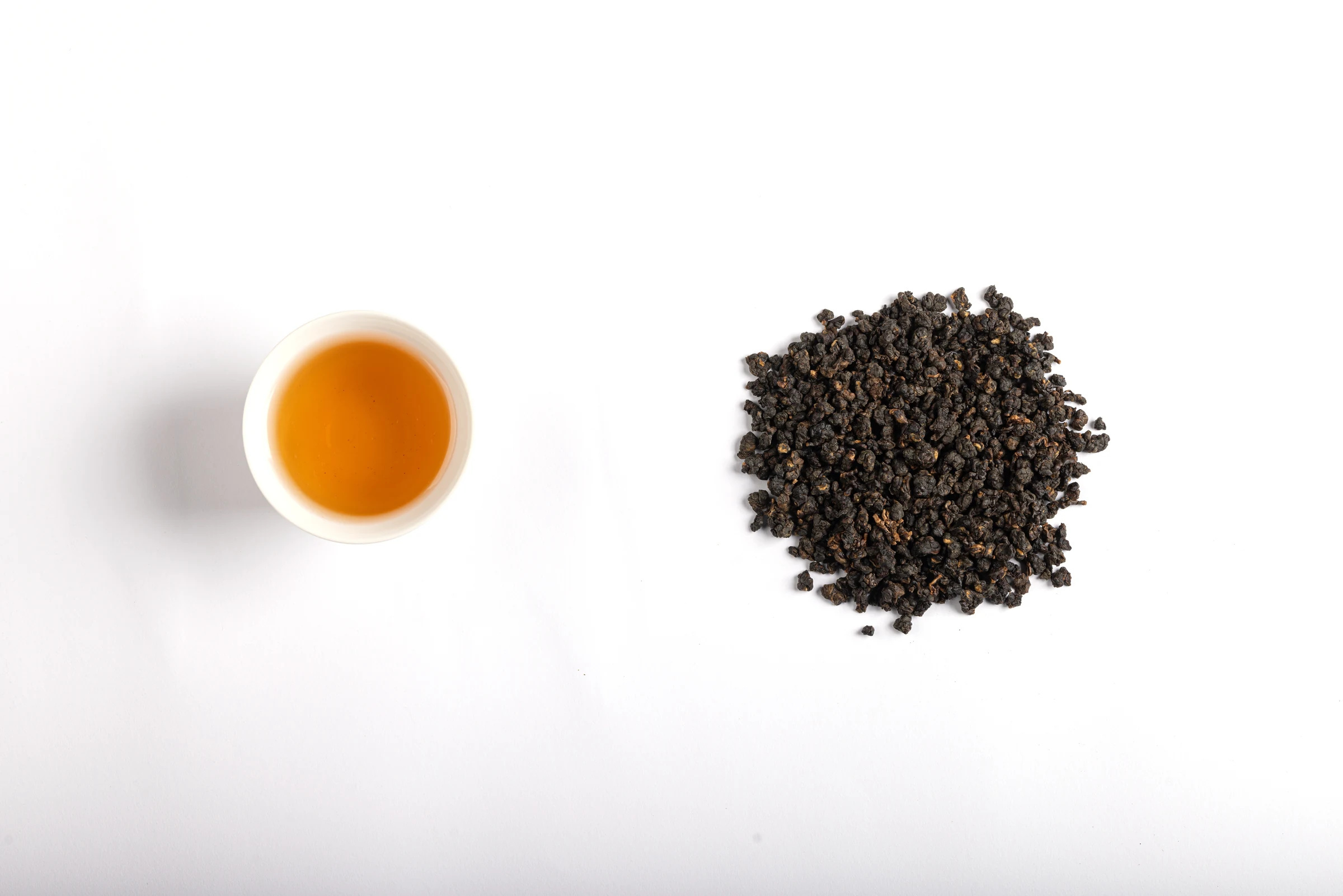
Flavour will vary with the amount of tea, water temperature and steeping time.
This tea is characterised by honey, floral and fruit notes, with a sweet finish.
Choose 150 g for regular drinking, or try the 75 g size first.
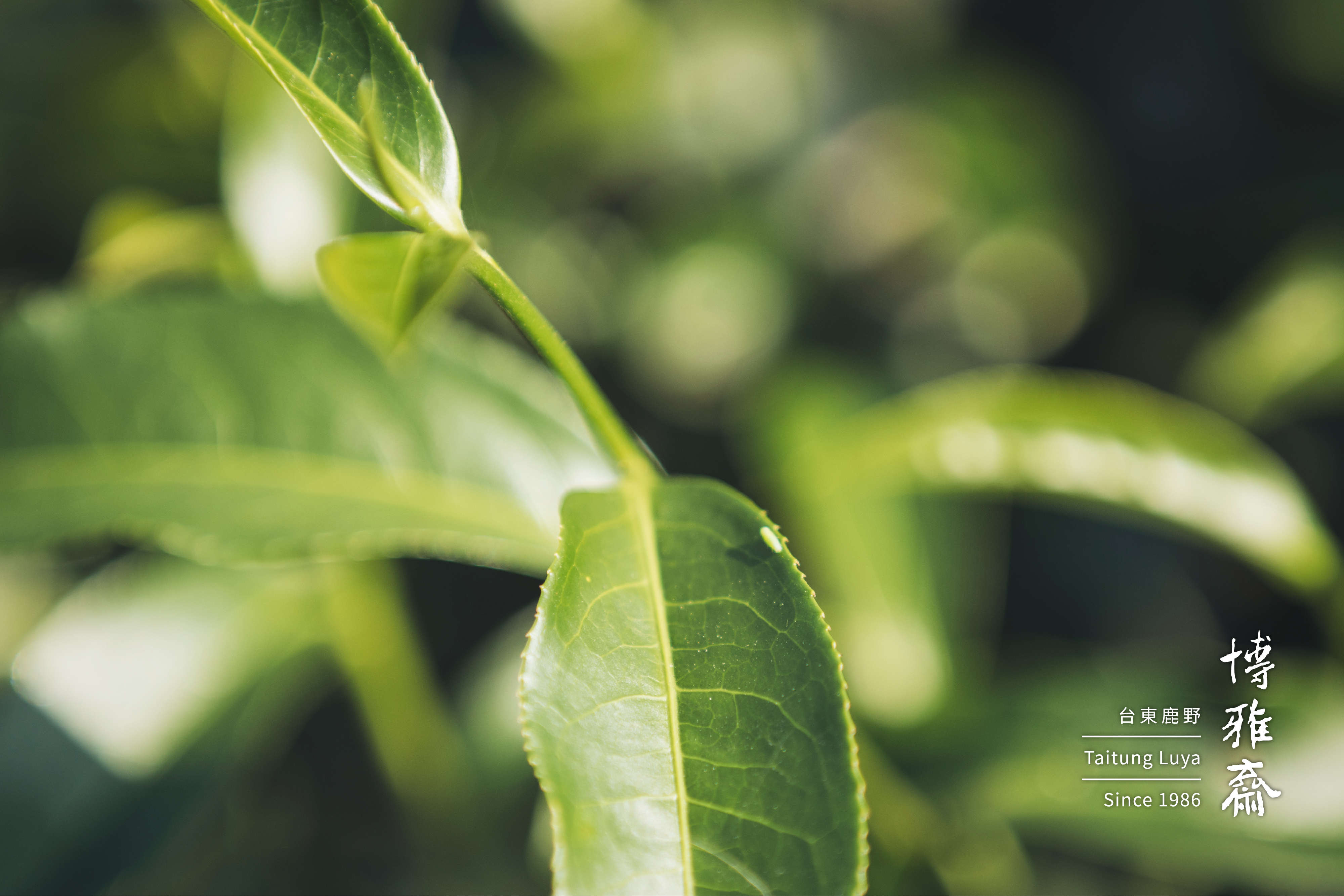
Tea leaves bitten by the small green leafhopper are slowly roasted at a low temperature, bringing honey notes and a full body.
Made with a high degree of oxidation and a medium roast. The dry tea forms dark reddish, semi-rolled leaves; the clear liquor is amber to orange-red.
Brew hot or cold using the ratios below, then adjust to taste.
3 g tea · 95–98°C
Steep for 3 minutes; reinfuse twice.
6 g tea · room-temperature drinking water
Refrigerate for 6–8 hours and shake before drinking.
Use a tea-to-water ratio of 1:25.
| Infusion | Water temperature | Time |
|---|---|---|
| First | 99°C | 60 sec |
| Second | 95°C | 20 sec |
| Third | 94°C | 25 sec |
| Fourth | 92°C | 30 sec |
| Fifth | 90°C | 35 sec |
Adjust the steeping time to taste; the tea is ready when the liquor is amber.
| Product / net weight | Top Grade Red Oolong / 150 g |
|---|---|
| Origin | Luye, Taitung, Taiwan |
| Ingredients | 100% tea leaves; no added flavouring or preservatives. |
| Shelf life | Two years |
| Manufacturer | Buo Ya Co., Ltd. |
Select an image to view it in detail.


OUR TEA-MAKING TEAM
The team has received first place in red oolong tea-making, recognition in the seventh Top 100 Young Farmers, and the Tea Industry Outstanding Contribution Award for advancing red oolong. Buo Ya has also received recognition from the International Taste Institute (ITI).
These are awards received by the brand and team. Please refer to each tea’s label for product-specific awards.
Certifications and test reports each have their own scope: a product, the company, farmland, specified packaging or submitted samples and batches.
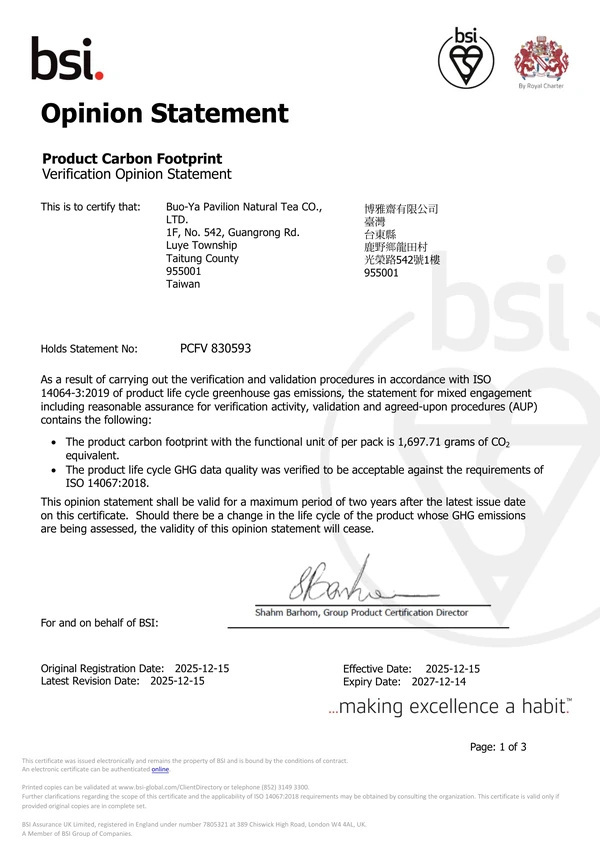
The product carbon-footprint verification applies to Fruity Red Oolong 150 g; it is not a carbon-footprint certification for Top Grade Red Oolong 150 g.
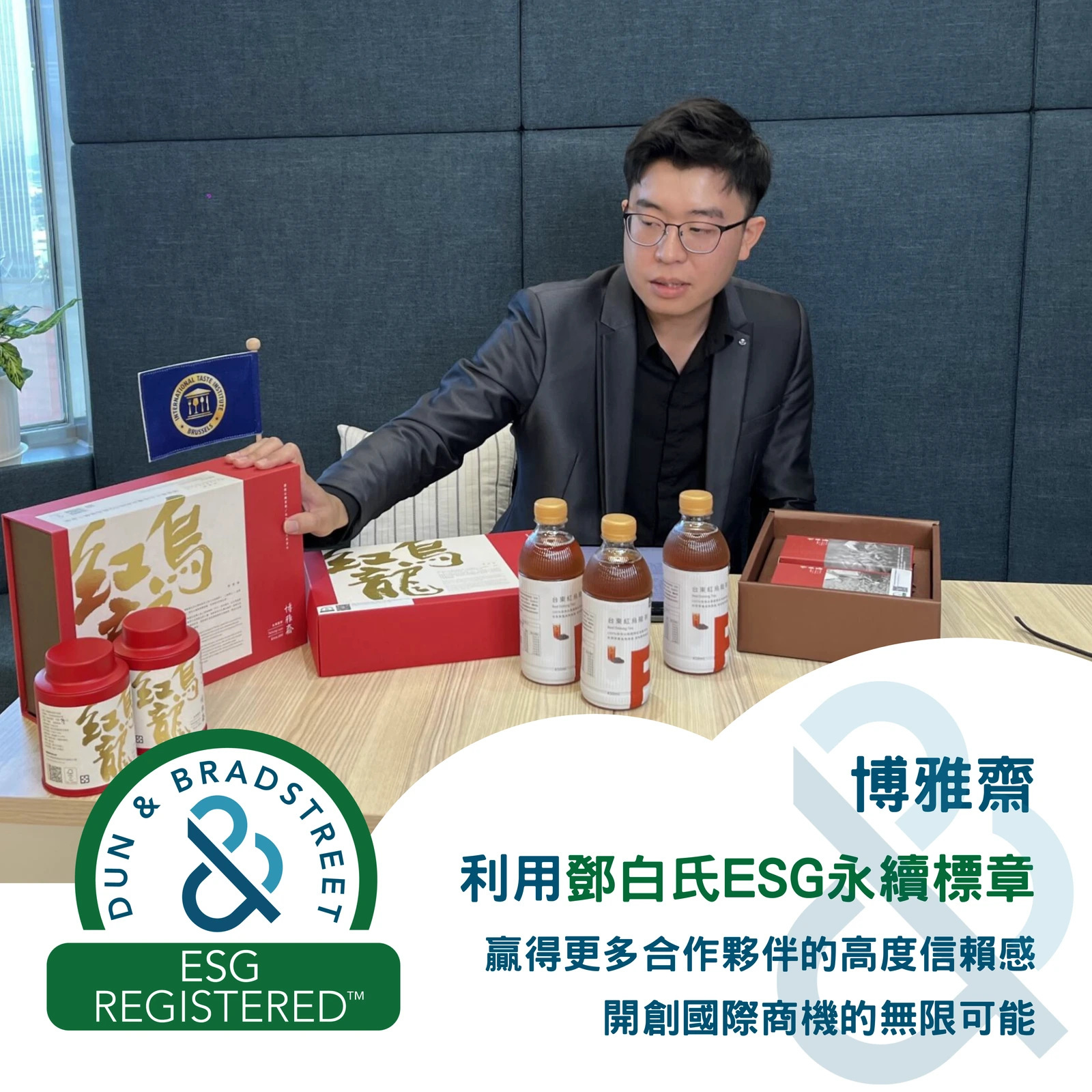
Company sustainability information for Buo Ya.Visit Dun & Bradstreet ↗
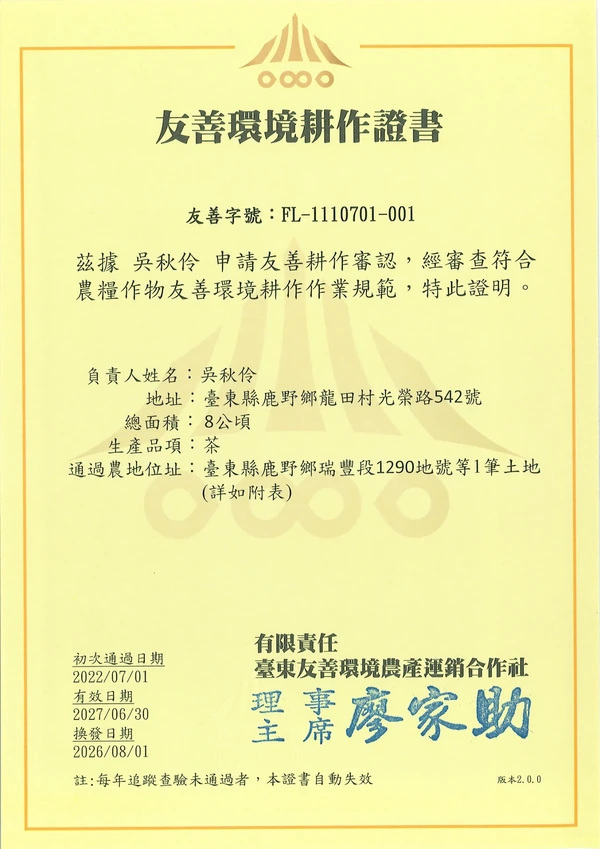
Applies to the farmland and crops identified in the original certificate.
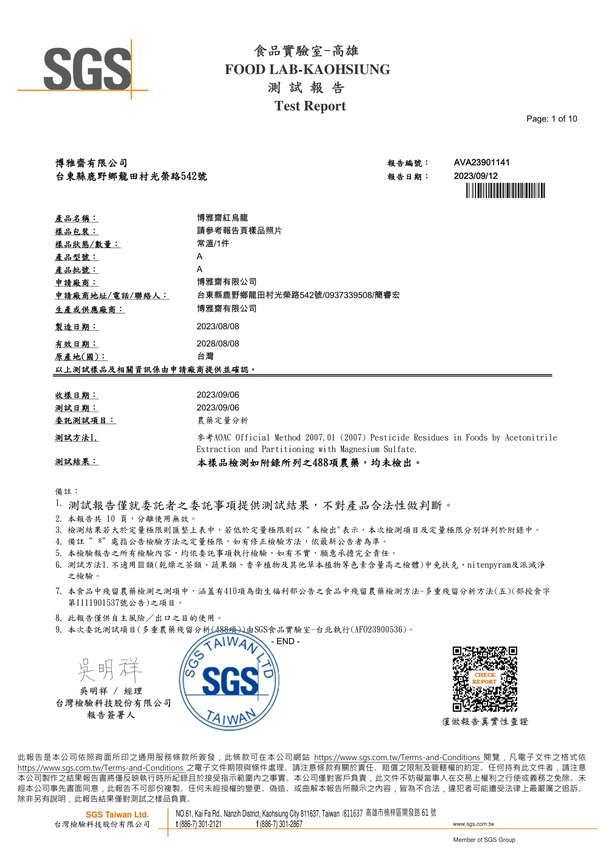
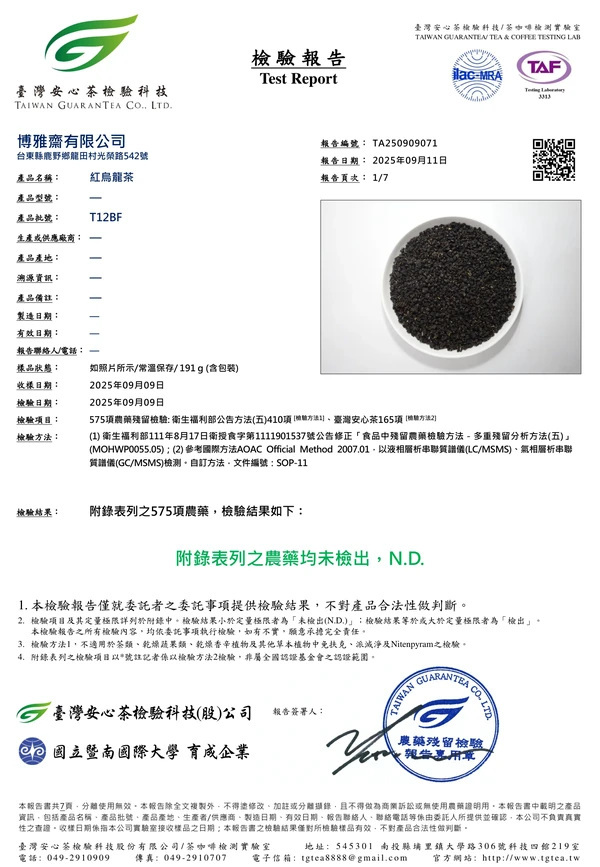
SGS and Taiwan Safe Tea test reports; results apply to the submitted samples and batches specified in each report.
Applies to the forest sourcing of specified paper boxes and packaging; it is not a certification of the tea itself.
Freshly picked tea leaves gradually lose moisture during withering. Contact with air allows enzymes in the leaves to participate in oxidation, known as fermentation in tea-making. As oxidation progresses, the leaves turn from green to red.
The leaves are gently turned so that they rub together and the cells at their edges are bruised, encouraging oxidation. This step affects the aroma of oolong tea.
Pressing and rolling breaks down leaf tissue and shapes the leaves.
The rolled leaves are dried with hot air to below 4% moisture, making them easier to store and transport while reducing unwanted odours and astringency.
Learn more about the tea’s flavour, tea-making and SGS test information.
The SGS image shows page 1 of a 2023 report. Test information applies to the submitted product and batch.


